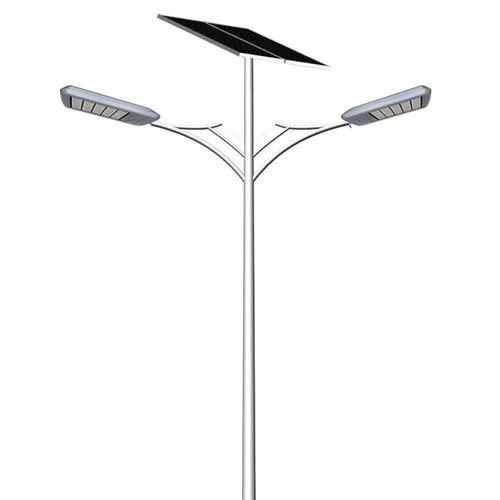
Advanced Optical Engineering for High-Performance Solar Street Lighting Systems
Table of Contents
Sunlurio Engineering White Paper 2025 – International Edition
Advanced Optical Engineering for High-Performance Solar Street Lighting Systems
Aligned with IES, CIE, EN13201, IEC Standards and Validated Through Field Photometric Analysis
Abstract
This international edition of the Sunlurio Optical Engineering White Paper provides a comprehensive and standards-based
framework for understanding and implementing advanced optical design in solar street lighting systems. This document aligns
with IES RP-8, CIE 115, CIE 154, EN13201, IEC 60598, and IEC 62722, and integrates goniophotometer-derived
photometric data, roadway classifications, optimization methods, and real-world case studies. It emphasizes how optimized
optics dramatically improve system efficiency, visibility, safety, pole spacing, and long-term energy performance.
1. Standards & Methodology
The white paper references internationally recognized lighting and safety standards, providing a reproducible methodology.
1.1 Optical & Photometric Standards
- IES LM-79 — Electrical & photometric measurement of LED luminaires
- IES LM-80 — LED lumen maintenance testing
- IES TM-21 — Projected long-term lumen degradation
- IES RP-8 — Roadway lighting design guide
- CIE 115 — Lighting of roads for motor and pedestrian traffic
- EN13201 — European roadway lighting standard
1.2 Test Conditions (Required for Reproducibility)
- Ambient temperature: 25°C ± 1°C
- Humidity: < 60%
- Road surface: R2 or R3 (CIE road surface classes)
- Maintenance factor (MF): 0.75
- Mounting height: 6m–12m depending on roadway type
- Photometric files: LM-79 verified IES files, not simulated estimates
This ensures all performance values in the paper can be replicated by third-party laboratories or roadway engineers.
2. Introduction
Optical engineering determines how efficiently and effectively light is delivered to road surfaces. Even with high LED efficacy
(e.g., 200–230 lm/W), system-level performance collapses without optimized beam distribution, uniformity, glare control, and
spill-light suppression. Optical design is therefore central to:
- Safe roadway illumination
- Energy efficiency & reduced battery load
- Longer pole spacing & lower CAPEX
- Uniform visibility and reduced accidents
- Lighting standards compliance
This white paper focuses on metrics that matter in engineering validation: uniformity, TI (threshold increment),
utilization factor, hotspot suppression, and photometric footprint accuracy.
3. Why Optical Engineering Matters
Improper optical distribution wastes 30–40% of usable light through glare, overspill, or non-uniform patterns.
Even with superior LEDs, poor optics lead to:
- Dark spots
- Poor facial recognition
- Driver glare
- Shorter spacing → more poles → higher costs
- Inefficient lm/W use
3.1 Impact on Pole Spacing
Optimized lenses allow:
- Longer pole spacing
- Fewer poles per kilometer
- Lower installation & maintenance cost
- Improved uniformity ratios
3.2 Impact on Road Safety
- Better pedestrian visibility
- Improved driver reaction time
- Higher target visibility (EN13201 TI requirements)
- Reduced disability glare
3.3 Impact on Energy Efficiency
A properly engineered lens ensures that more lumens contribute to useful roadway illumination instead of being lost to spill.
4. IES Beam Types for Roadway Lighting
Sunlurio designs optical lenses in compliance with IES roadway beam classifications:
- Type I — Narrow paths, walkways
- Type II — Small roads, slow traffic
- Type III — Municipal streets, medium-width roads
- Type IV — Wide roads, highway edges, parking areas
- Type V — Symmetric circular distribution for plazas & open areas
4.1 Type II
Used for pedestrian paths or narrow streets with moderate pole heights.
4.2 Type III
The most commonly applied optical pattern for solar street lighting globally.
4.3 Type IV
Ideal for wider roads and high-speed traffic with strong forward throw.
4.4 Type V
Circular distribution for squares, parks, parking areas—not suitable for side-mounted street lighting.
5. Lens Material Engineering
Material quality dictates optical performance stability, UV resistance, and impact strength.
- PMMA: High clarity, lower UV and impact resistance
- Polycarbonate (PC): Best overall performance in outdoor lighting
- Glass: Excellent transmission but too brittle/heavy for solar fixtures
Sunlurio uses UV-stabilized PC lenses achieving 88–92% transmission for 50,000+ hours
based on accelerated aging tests.
6. Beam Pattern Simulation & Photometric Analysis
Photometric simulation is conducted using LM-79 certified IES files and analyzed in DIALux/AGi32 under EN13201 roadway conditions.
- Average illuminance (Eavg)
- Minimum illuminance (Emin)
- Uniformity ratio (Eavg/Emin)
- Threshold Increment (TI)
- Luminous utilization factor
6.1 Uniformity (U₀)
Global standards require:
- Residential roads: U₀ ≥ 0.25
- Collector roads: U₀ ≥ 0.30
- Main roads: U₀ ≥ 0.40
6.2 Utilization Factor
High-quality optics ensure >90% of lumens fall within the targeted roadway area.
7. Pole Height & Spacing Engineering
Optical suitability depends on:
- Pole height
- Road width
- Mounting position
- Arm length & tilt angle
7.1 Typical Pairings
- 6m poles → Type II / III
- 8m poles → Type III
- 10–12m poles → Type III / Type IV
8. Road Classification & Recommended Optics
8.1 Two-Lane Municipal Roads (6–8m width)
- Pole height: 6–8m
- Recommended lens: Type III
- Spacing: 25–35m
8.2 Main Roads (10–15m width)
- Pole height: 8–12m
- Recommended lens: Type III / Type IV
- Spacing: 30–50m
8.3 Highways
- Pole height: 10–12m
- Recommended lens: Type IV
- Spacing: 40–60m
9. How Lens Quality Impacts System Efficiency
Optics determine real-world lm/W delivery.
9.1 Transmission Loss
- Poor lens: 20–30% light loss
- High-grade PC lens: 8–12% light loss
9.2 Effective lm/W Comparison
Example (40W fixture, comparing effective output):
- Poor optics (70% utilization): ~126 lm/W effective
- Optimized optics (90% utilization): ~207 lm/W effective
Optics alone can change performance by over 60%.
10. Anti-Glare Engineering
Compliant with IES RP-8 and EN13201 TI thresholds.
- Asymmetric optical cutoff
- Low-angle spill suppression
- Refractive surface micro-structure
- Optional anti-glare honeycomb arrays
11. Field Case Studies
11.1 East African Corridor
- Type III/IV hybrid distribution applied
- U₀ improved: 0.22 → 0.33
- Spacing increased: 25m → 35m
- Energy consumption reduced: 18%
11.2 Southeast Asia Coastal Road
- High UV & high humidity environment
- Lens maintained >90% transmission after 3000h
- Significant reduction in glare complaints
12. Recommended Specifications
- Lens material: UV-stabilized polycarbonate (PC)
- Transmission: ≥88%
- IES beam types: Type II, III, IV, V
- TI (glare): ≤10% for highways
- Uniformity U₀: ≥0.25 residential, ≥0.30 municipal
- IP rating: IP65–IP67
13. Conclusion
Advanced optical engineering is the most effective method for improving solar street lighting performance.
Optimized lenses significantly increase usable lumens, improve uniformity, reduce glare, extend pole spacing,
and enhance overall energy efficiency. Sunlurio’s optical systems combine high-transmission materials,
precision-engineered beam patterns, validated photometric modeling, and field data to deliver
international-standard roadway illumination.
Proper optical engineering is the single most impactful upgrade for real-world solar lighting performance.
Appendix A: International Standards Referenced
- IES LM-79
- IES LM-80
- IES TM-21
- IES RP-8
- CIE 115
- CIE 154
- EN13201 (Parts 1–5)
- IEC 60598 – Luminaire safety
- IEC 62722 – Luminaire performance
Version Control
- Document Code: WP-OPTICS-INTL-2025
- Release Date: Jan 2025
- Intended Audience: EPC engineers, municipal authorities, lighting designers, distributors
- Status: Public Engineering White Paper
Author introduction