5G Solar Street Light System – Technical White Paper
Table of Contents
A gateway-free, pole-to-cloud architecture designed for large-scale municipal and road solar lighting projects.
1. Introduction and Scope
This white paper presents Sunlurio’s 5G smart solar street light system as an end-to-end solution for road and area lighting projects in Africa, the Middle East and other emerging markets. It is written for EPC contractors, municipal buyers, consultants and financing institutions who need to understand how gateway-free cellular IoT can improve reliability, reduce operation and maintenance (O&M) costs and provide auditable performance data for large-scale solar street lighting.
Over the past decade, expectations for solar street lighting have shifted from simple off-grid illumination to city-level smart operation. Authorities increasingly require remote monitoring, fault diagnostics, automated dimming and centralised control. In real deployments, Sunlurio has repeatedly observed that communication – not LED or battery performance – is the weakest link in many “smart” systems.
Traditional communication methods such as ZigBee and LoRa rely on local RF meshes and centralised gateways. As projects scale from a few dozen to thousands of poles, these architectures suffer from interference, multi-hop instability and single points of failure. At the same time, rural and peri-urban roads often lack the robust cabinet and power infrastructure required to support gateways.
With the rise of 5G NB-IoT and LTE Cat.1, cities now have access to cellular IoT networks designed specifically for massive device deployments: wide coverage, strong penetration, low power consumption and carrier-grade security. This enables a new approach for solar street lights: a gateway-free, pole-to-cloud architecture in which each luminaire is an independent IoT node.
2. Real-World Challenges in Solar Street Lighting Projects
In actual deployments across Africa and other emerging markets, several recurring challenges appear once projects move from initial handover to daily operation.
2.1 Long roads and limited maintenance resources
Road sections can easily reach tens or hundreds of kilometres. Maintenance teams have few vehicles and technicians, fuel is expensive and night travel carries safety risks. On conventional projects, faults are detected only after public complaints, and technicians must drive long distances at night to visually inspect each pole.
2.2 Long rainy seasons and battery lifetime
Many regions experience weeks of cloudy or rainy weather during the wet season. On older solar street light projects, batteries are often deeply discharged night after night in these periods. After one or two years, large batches of batteries show severe degradation and must be replaced, creating unexpected costs for project owners.
2.3 Data requirements for financed and PPP projects
World Bank, development-bank and PPP projects increasingly require documented evidence of lighting availability, fault response time and energy savings compared with grid-powered systems. Simple “on/off” guarantees are no longer sufficient; authorities and financiers expect transparent data that can be audited.
2.4 Shortage of skilled technicians
There are limited numbers of technicians who fully understand both electrical systems and solar controllers. Staff turnover is high and training takes time. On many projects, controller parameters are configured manually in the field, pole by pole, which leads to inconsistent settings and configuration errors.
2.5 Safety, theft and vandalism
Dark roads create safety and reputation risks for local governments, while batteries, cables and panels are valuable targets for theft. Roadside cabinets and gateways are vulnerable to vandalism, water ingress and lightning damage. Traditional systems provide little or no real-time visibility when such events occur.
2.6 Weak roadside infrastructure
In many rural and peri-urban areas, it is difficult or uneconomical to build and protect roadside control cabinets, wired communication lines and additional power feeds for gateways. Architectures that depend heavily on this infrastructure are hard to deploy and maintain in these environments.
3. Sunlurio’s Gateway-Free 5G Architecture
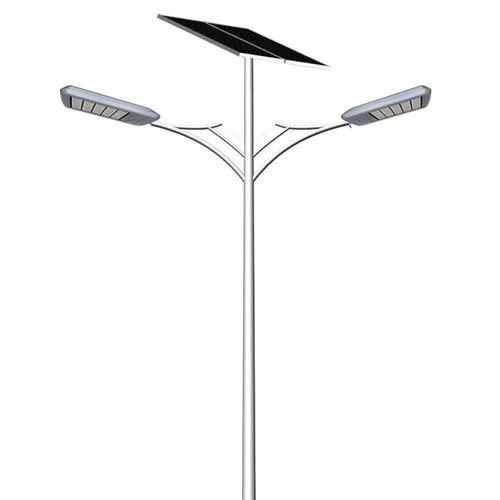
Sunlurio’s 5G smart solar street light system was designed specifically to address the above challenges. The core concept is simple: each pole is a self-contained IoT node that talks directly to the cloud over the mobile operator’s network, with no local gateways or mesh networks in between.
3.1 Pole-to-cloud system flow
Solar Street Light → Embedded MPPT Controller + Cellular IoT → Mobile Network (NB-IoT / LTE Cat.1) → Sunlurio Cloud → Web Portal / App
- Each luminaire has an integrated MPPT charge controller with built-in NB-IoT / LTE Cat.1 module and SIM.
- Every pole has its own unique ID and can be displayed on the map with GPS coordinates (where enabled).
- No LoRa/ZigBee mesh, concentrators, roadside cabinets or external 4G/5G routers are required.
- A failure on one pole does not affect communication from the rest of the system.
3.2 Comparison with gateway-based “4G” systems
Many systems marketed as “4G smart lighting” still use a local RF network (for example 433 MHz, LoRa or ZigBee) between the poles and a centralised gateway in a cabinet. Only the gateway has a cellular modem, making it a single point of failure and adding extra hardware, wiring and maintenance tasks. By contrast, Sunlurio’s design leverages the existing mobile operator network and removes the gateway layer entirely.
| Aspect | Gateway-Based RF + 4G | Sunlurio Gateway-Free 5G |
| Network Topology | Poles → RF mesh → gateway → cloud | Poles → NB-IoT / LTE Cat.1 → cloud |
| Single Point of Failure | Gateway failure can take down dozens or hundreds of poles | Each pole communicates independently |
| Field Hardware | Cabinet, gateway, extra power supply and wiring | No roadside cabinet or gateway required |
| Rural Coverage | Limited by RF range and obstacles | Uses existing mobile operator coverage |
| O&M Complexity | Gateway configuration, firmware and physical protection | Only luminaires and cloud platform to maintain |
3.3 Integrated controller and communication design
Instead of adding a separate communication box, Sunlurio uses a deep integration design where the solar MPPT controller, metering functions and cellular IoT module share one industrial controller board. Key features include:
- Optimised power consumption for off-grid solar applications.
- Industrial-grade NB-IoT / LTE Cat.1 module with extended temperature range.
- Integrated antenna design for outdoor conditions.
- Support for GPS positioning where required for asset tracking and mapping.
- Secure, encrypted communication between field devices and the cloud platform.
4. Key Functions of the 5G Smart Solar System
4.1 Remote control
- On/off control by pole, group, road section or project.
- Brightness and power curve settings adjustable over-the-air.
- Seasonal and rainy-season profiles that can be applied to selected regions.
- Holiday and special-event schedules for specific dates.
4.2 Remote monitoring
- Battery voltage, temperature and basic health indicators.
- PV charging current, voltage and daily energy production.
- LED driver current and controller operating status.
- Event logs for switching, protection actions and parameter changes.
- Alarm events such as over/under-voltage, communication loss or door opening (where sensors are fitted).
- GPS location and map view of all poles.
4.3 Smart O&M and reporting
- Automatic fault and tamper alarms sent to O&M teams by e-mail or app.
- Trend analysis for battery performance and frequently affected road sections.
- Availability statistics (percentage of poles operating) by road, area or project.
- High-level energy-saving and CO₂ reduction estimates versus grid-powered lighting.
4.4 Anti-theft and asset protection
While no system can completely prevent theft, the 5G platform improves detection and response:
- Unusual patterns such as sudden zero battery voltage or loss of PV charging are highlighted.
- Long offline periods on specific poles can be flagged for inspection.
- GPS location and event history help identify hotspots where theft or vandalism occurs more often.
5. Benefits for Different Stakeholders
5.1 EPC contractors and integrators
- Fewer hardware components to design, procure and install – no gateways or roadside cabinets.
- Simpler project drawings and bill of materials.
- Faster commissioning: once a pole is installed and powered, it can register on the platform.
- Reduced number of site visits for fault finding; teams travel directly to the correct pole with the correct spare parts.
5.2 Municipalities and road authorities
- Better visibility of lighting assets and operational status across long corridors and scattered sites.
- Improved uptime and road safety thanks to earlier detection of problems.
- Documented performance data that can be used in internal reporting and public communication.
5.3 Financing institutions and PPP project companies
- Access to availability and fault-response data to verify contractual performance.
- Energy-saving and CO₂ reduction estimates to support ESG reporting and green-finance criteria.
- Lower technical and O&M risk due to the simplified architecture and independent connectivity per pole.
6. Typical Application Scenarios
- Remote highways and national roads where there is no fixed communication infrastructure and maintenance teams are based far from the site.
- Rural roads and dispersed village networks where RF coverage for gateways would be patchy and cabinets difficult to protect.
- Financed and PPP projects that require long-term performance data and clear reporting on uptime and energy savings.
- Smart-city corridors where solar street lights need to form part of a wider IoT platform alongside cameras and sensors.
7. Field Experience and Deployment Notes
Sunlurio has deployed the gateway-free 5G architecture in real projects in West Africa and the Middle East, covering long corridors and mixed urban–rural environments. In these deployments, operators have reported:
- Reduced reliance on night-time visual inspections.
- Faster identification of problem poles and sections.
- Improved confidence when presenting performance data to authorities and financiers.
Actual communication performance – such as latency and successful report rates – depends on the specific mobile operator network in each country. During design and pilot stages, Sunlurio works with local partners to verify network coverage and select appropriate reporting intervals and alarm thresholds.
8. Conclusion
The Sunlurio 5G smart solar street light system represents a practical evolution of municipal lighting for regions where long roads, limited maintenance resources and harsh environments make traditional gateway-based architectures difficult to operate. By integrating control, metering and cellular IoT on the same board inside each luminaire, the system:
- Eliminates gateway failure and cabinet-related risks.
- Provides pole-level visibility and control over large areas.
- Supports data-driven O&M, financing and ESG reporting.
Sunlurio is one of the first Chinese manufacturers to deploy this gateway-free NB-IoT / LTE Cat.1 architecture in large-scale solar street lighting projects. The design is continuously refined based on field feedback from African, Middle Eastern and other emerging markets, with the aim of turning solar street lights into manageable, traceable and predictable infrastructure assets over their full lifetime.
Author introduction