
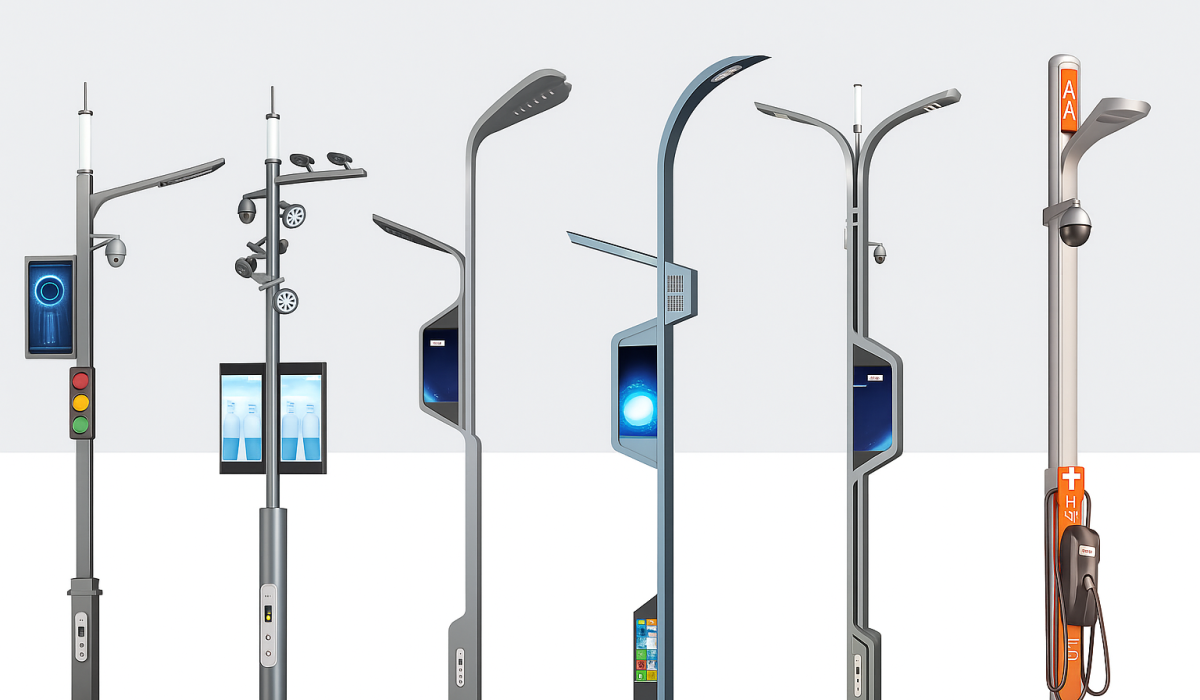
This isn’t a neat whitepaper. It’s closer to the kind of message I end up typing at 1:17 a.m. after a long week hopping between Lusaka, Accra, and Addis… half troubleshooting, half trying to convince municipal teams that “smart lighting” isn’t magic. It works — yes — but only when you respect a hundred tiny things everyone forgets.
Before I dive in, let me at least give you a rough sense of where this whole rant is going, otherwise it’ll feel like listening to a late-night voice note.
Roughly, I’m going to touch on:
- Why LoRa behaves like two different species in Lusaka vs Accra
- When NB-IoT is a blessing — and when it makes you want to throw the controller into a ditch
- The cloud-side costs and “silent killers” nobody budgets for
- Deployment mistakes that quietly murder “smart” projects before they even go live
Okay. Now the chaos begins.
A Night in Lusaka (and Why Smart Lighting Never Behaves the Same Twice)
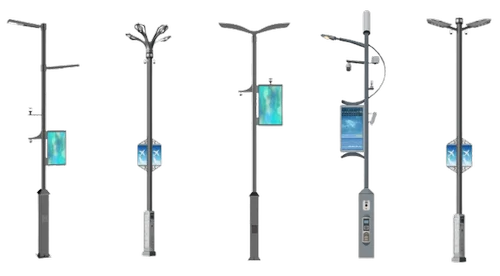
Lusaka, 2022. About 400 LoRa-controlled solar street lights near the Great North Road circle. Everything tested fine in the factory. Everything looked great on DIALux. Everyone was smiling.
Then after deployment, around 2:40 a.m. (I remember because we were still awake in the WhatsApp group), clusters of lamps started going offline. Not before midnight. Not during peak load. Only near 3 a.m.
Turns out the poles — installed by another contractor — were leaning maybe 10–12 degrees. You wouldn’t even notice in the day. But when the wind picked up, the LoRa antennas were actually swinging, changing the angle just enough to knock the SNR off a cliff. ±8 to ±10 dB swings.
Nothing was “broken.”
RF just doesn’t care about your perfect design drawings.
That’s the thing about IoT: the problems rarely match the brochures.
So… What Even Counts as a Smart Lighting System?
If you want the definition:
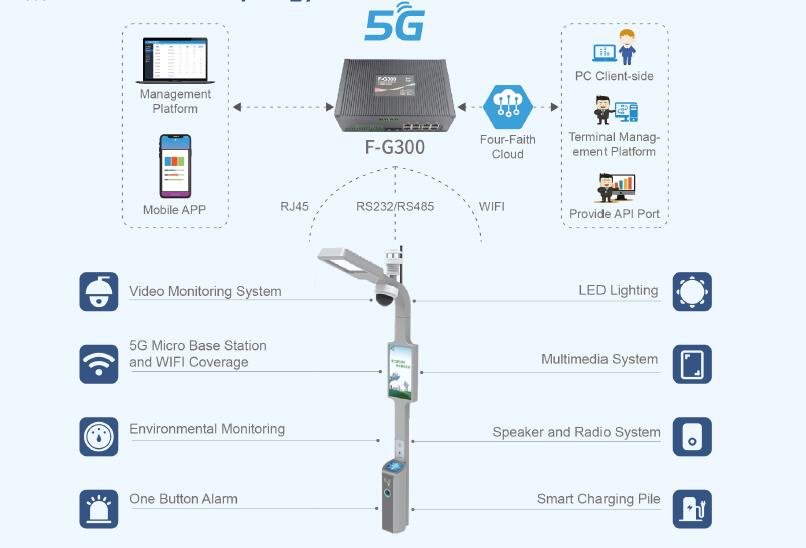
A smart street light IoT system is basically a network of lamps that talk back — sometimes more than you want, sometimes not enough.
Inside each lamp, there’s usually:
- A controller (your brain or your headache)
- A couple sensors (light, motion, temperature)
- LoRa or NB-IoT module
- A dimming engine
- A tiny memory chip that fills up if you forget to configure log rotation
- And one installer who swears he followed the wiring diagram but definitely didn’t
I’ve seen cities with 800 lamps, everything smooth.
I’ve also seen cities with 200 lamps and daily alarms because someone swapped battery chemistries without telling anyone.
Smart lighting works — but like I said at the beginning, always with conditions.
LoRa — Amazing When It Works, Miserable When It Doesn’t
LoRa has a fan club. And to be fair, in some places it deserves one.
What LoRa Actually Feels Like in the Field
In rural Tanzania, we got stable LoRa links at 6.2 km on SF10 with almost no retries.
In Accra, the same hardware struggled at 600 meters because of high-rise buildings, billboards, multipath reflections, and sometimes just “urban RF chaos” (my unofficial term).
Link budgets lie when the real world gets involved.
The Biggest LoRa Mistake I See
People mount gateways at 5 or 6 meters.
A gateway that low isn’t a gateway — it’s a decorative antenna.
Below about 10–12 meters in a cluttered environment, LoRa is basically whispering into a wall.
And yes, LoRa is cheap…
…until the gateway reboots at midnight and your nodes jump between SF7 and SF12 trying to reconnect.
We lost half a night once because of this.
Where LoRa Actually Shines
- Estates
- Rural roads
- Industrial compounds
- Large open areas
- Places where you control the environment
Where LoRa doesn’t shine:
- Valleys
- Dense cities
- Areas with unpredictable RF noise
- Sites where the gateway height is “whatever the installer finds convenient”
That one kills more LoRa networks than interference.
NB-IoT — Clean, Predictable… Until It Isn’t
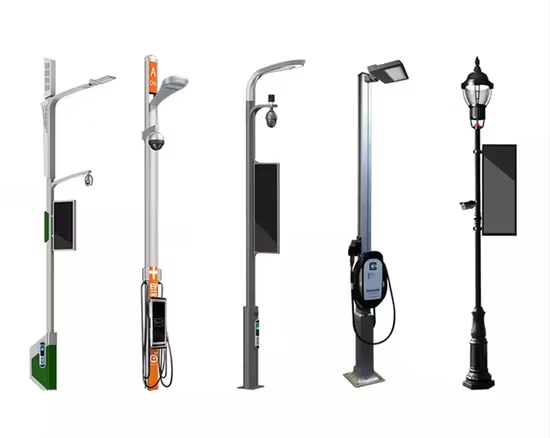
NB-IoT is what cities love. It feels stable, it feels modern, and you don’t have to explain why you need towers and gateways.
Reality Check: NB-IoT Has Its Own Drama
In Nairobi CBD? Perfect. We saw near-instant attach times.
In Addis during cold mornings?
Modules took 18–30 seconds to wake up.
Cold batteries + slightly congested cell towers = slow attach cycles.
And in some industrial zones, NB-IoT collapses because of machinery noise. No operator admits this, but we’ve seen it more than once.
Where NB-IoT Makes Life Easy
- Citywide deployments
- Dense neighborhoods
- Highways with good tower spacing
- Government smart-city programs
- Places where consistency matters more than “free operation”
The Downsides (That Vendors Gloss Over)
- SIM/eSIM subscription fees
- Total operator dependency
- Bandwidth throttling during peak hours
- Firmware pushes failing without clear logs
NB-IoT is fantastic for big cities. But it’s definitely not “universal truth.”
Cloud Platforms — The Silent Bottleneck Nobody Budgets For
Everyone loves dashboards.
Pretty maps. Green dots. Energy charts.
But the real demons hide underneath.
Here are three things cloud vendors rarely say straight:
1. Data retention will eat your storage alive
If each lamp uploads logs every 5 minutes, 2,000 lamps can generate millions of lines per week.
2. API rate limits suddenly matter
If your integration system tries to pull 1000 devices at once, something will throttle.
3. Fault storms will test your backend
A rainy season + weak solar + aging batteries →
200 undervoltage alarms at 4:30 a.m.
Most cloud systems are not designed for this surge.
A Quick Field-Test for Cloud Platform Quality
If the vendor can’t tell you what happens when:
- 500 devices go offline at once
- Or a gateway floods the platform with retry packets
…they probably haven’t run a real deployment before.
What Actually Makes Smart Lighting “Smart”? (Not the Brochure Version)
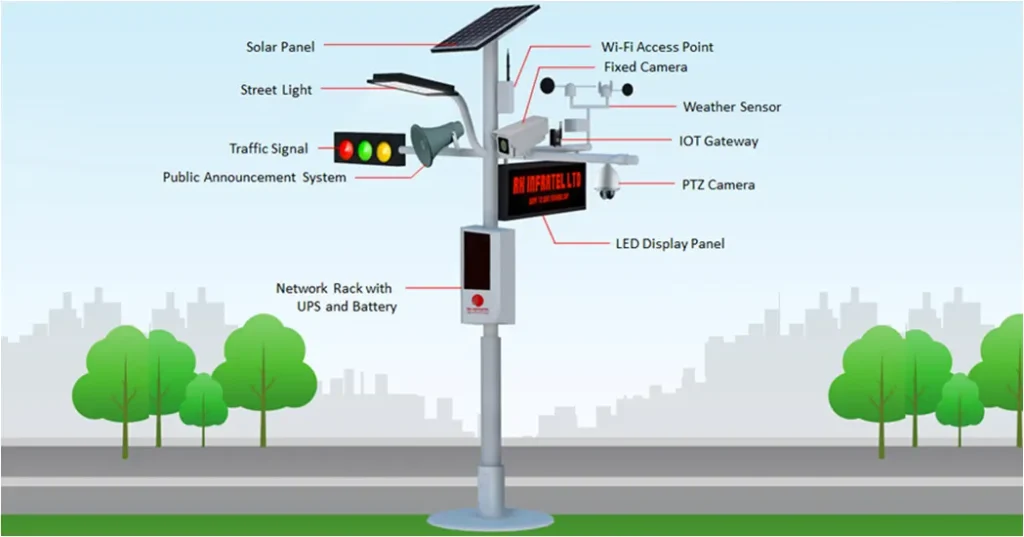
A lot of “smart features” sound cool until you see what actually matters.
Features that really matter
- Schedules that don’t drift after MCU resets
- Adaptive brightness that doesn’t go crazy with passing goats
- Fault detection that catches thermal drift, not just binary faults
- OTA updates that don’t brick 50 lamps at once
- Energy metering that stays accurate as drivers age
- Dashboards that load even over spotty 3G
And what breaks first when you scale?
If I rank the breakpoints from experience:
- Battery curves (misconfigured → chaos)
- Waterproofing & moisture
- RF performance
- Time sync drift
- Firmware mismatches
Smart lighting isn’t shiny hardware.
It’s the absence of these failures.
Deployment — The Graveyard of Most Smart Lighting Projects
I swear 70% of smart-lighting failures happen during installation, not operation.
You can buy NASA-grade controllers, but if the installer:
- Leaves the gland loose
- Mounts the antenna touching the pole
- Uploads the wrong dimming curve
- Mixes up CAT vs LiFePO4 battery settings
- Doesn’t tighten the ground
- Skips the signal test
The system will behave like it was designed by amateurs.
If I rank root causes:
- Wrong battery curve
- Bad waterproofing
- RF stupidity
- Time sync mismatches
- Firmware inconsistencies
Quick sanity-precheck (we use this now)
Power → RF → Time → Firmware
Nine out of ten failures sit inside those four buckets.
Troubleshooting in the Real World (Not in the Manual)

Some of our recurring headaches:
Intermittent LoRa packets
Not RF noise — the pole itself was wobbling in the wind.
Sensor misreads
Dust layer fooled a lamp into thinking it was “night” at noon.
NB-IoT slow wake-ups
Cold + nearly empty batteries = delayed attach cycles.
OTA disasters
A field tech once pushed OTA during low battery season…
We bricked 200 lamps.
That week aged me five years.
Time desync
MCUs losing track of time after repeated low-voltage resets.
These things don’t show up in datasheets. Only in scars.
A Few FAQs, but More Like Group Chat Answers
Do smart lamps need constant internet?
No. They just need predictable windows. Continuity is overrated.
LoRa or NB-IoT?
Depends. Hills + budget → LoRa.
Dense city + reliability → NB-IoT.
Industrial zones → pray first.
Are they secure?
Mostly yes — unless someone leaks the API key. Seen it. Twice.
Can one LoRa gateway handle 1000 lamps?
Yes. But only if you mount it like you actually respect RF physics.
So… Which One Do I Recommend?
Honestly?
It depends — and anyone who gives a one-line answer is oversimplifying.
If you force me to choose without site data (which I hate):
NB-IoT for cities. LoRa for everywhere else.
But life isn’t that clean.
I’ve seen:
- LoRa fail in valley-shaped estates
- NB-IoT collapse in high-noise industrial zones
- LoRa outperform NB-IoT in rural Zambia
- NB-IoT beat LoRa in tightly packed neighborhoods where you can’t raise the gateway
- Both fail spectacularly when someone sets the wrong battery curve
If it were my own money, I’d choose:
LoRa — when I control the environment.
NB-IoT — when I don’t.
And no matter what you choose:
Keep spare controllers.
Smart lighting is brilliant, but only when all the tiny moving parts behave — and they rarely all behave at the same time.
Anyway… that’s my late-night download. If it helps someone avoid even one deployment headache, then it was worth typing.