
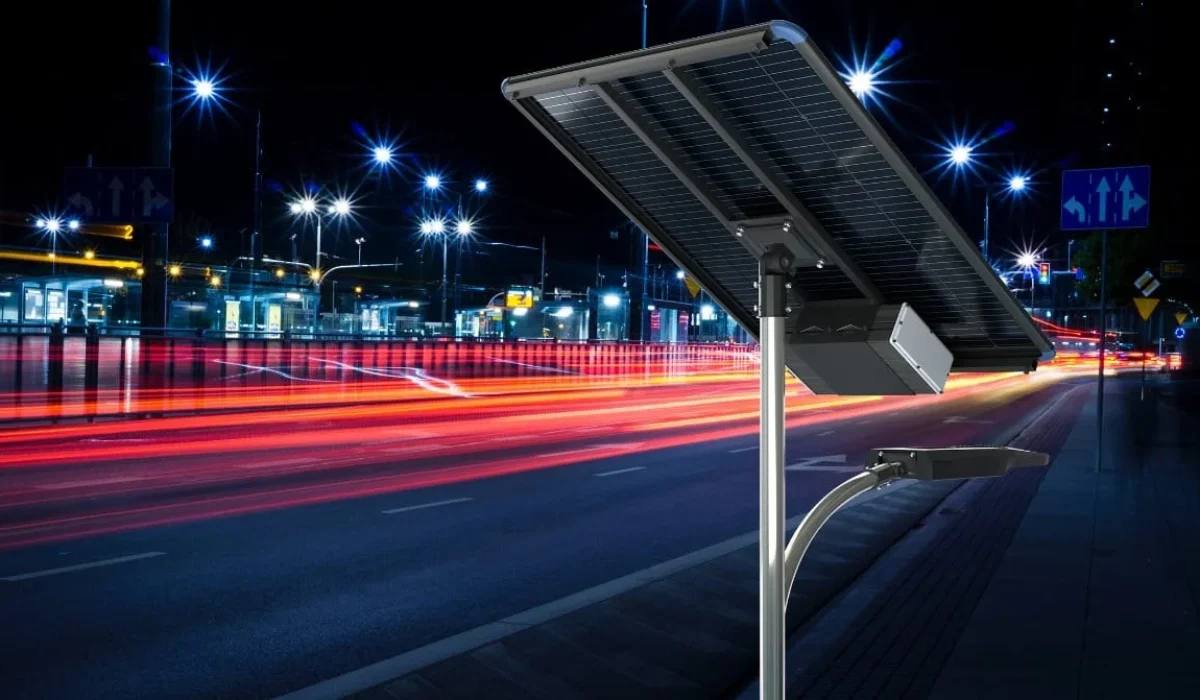
A practical, field-tested guide to cutting real-world project cost while maximizing performance and ROI — specifically for Solar LED Lighting Projects across campuses, industrial parks, ports, estates, and municipal roads.
Why Cost-Saving Matters in Commercial Solar LED Lighting Projects?
Commercial solar projects fail or succeed long before installation — usually at the design and planning stage.
Over the past 15 years working with EPC teams in Ghana, Kenya, UAE, and Senegal, I’ve seen budgets burst simply because a site wasn’t assessed properly, LEDs were inefficient, or the system was oversized by 30–40%. A smarter approach doesn’t mean cutting corners; it means removing waste.
Below are five cost-saving strategies I’ve seen consistently reduce project budgets without reducing lifespan, illumination quality, or reliability.
1. How Does a Thorough Site Assessment Reduce Solar LED Lighting Project Cost?

Accurate site assessment prevents oversizing, misplacement, shading issues, and unnecessary hardware.
In real deployments — especially in industrial yards or university campuses — even a single incorrectly placed pole can force you to upgrade the battery, increase panel size, or add a second fixture. All of this drives cost up.
Key Cost-Saving Actions
- Use solar pathfinder tools to analyze shading and sun hours
- Evaluate seasonal variations (rainy season in West Africa vs. dry season in Gulf)
- Avoid placing lights near tree clusters, warehouse edges, or high-shadow zones
- Confirm mounting heights vs. required lux levels using simulation
- Validate assumptions with an experienced lighting engineer (big one — avoids 30% oversizing)
Why this saves money:
Better placement → optimized solar capture → smaller panel + smaller battery → fewer system failures → lower lifecycle cost.
2. Why Choosing High-Efficiency Panels & LEDs Cuts Total Project Cost?
High-efficiency components reduce system size, meaning:
- smaller panels
- smaller batteries
- fewer poles
- fewer fixtures
- lower transport and installation cost
In dozens of Kenyan industrial-area projects, switching from 150 lm/W to 210 lm/W LEDs reduced fixture quantity by 20% — that’s direct CAPEX savings.
Cost-Saving Tips
- Select solar panels with strong conversion efficiency (20–22% mono modules)
- Choose LEDs ≥ 190–220 lm/W for commercial-grade brightness
- Focus on lifecycle, not upfront cost — a cheap LED often dies early
- Use L70 or TM-21 data to compare real lifespan
Bottom line:
Higher efficiency = fewer watts = smaller energy system = major cost savings.
3. How Optimized System Design Prevents Overspending?

Over-designing is one of the most common (and expensive) mistakes in Solar LED Lighting Projects.
I’ve seen engineers specify 200Ah batteries where 100Ah would work perfectly — or poles placed too close, doubling fixture count.
Smart Design Principles
- Use DIALux/AGi32 simulation to avoid oversizing
- Match lumen output to actual lux requirements (EN13201 or local standards)
- Avoid excessive battery reserves unless in cloudy or coastal zones
- Standardize pole heights to reduce procurement variance
- Consider modular designs (easier maintenance + scalable)
Why this matters:
Right design = no waste.
Every oversized component directly increases CAPEX and OPEX.
4. How Incentives, Grants & Rebates Reduce Project Cost?
Many regions — especially in North America, EU, Middle East, and parts of Africa — offer financial support for renewable transitions.
Most EPC teams simply overlook these programs due to paperwork fatigue.
What to Look For
- Federal & regional renewable-energy subsidies
- Utility company rebates for LED efficiency improvements
- Carbon-credit or green-building incentives
- Accelerated depreciation benefits for renewable assets
- Government programs for rural electrification or smart-city upgrades
Typical savings range from 5–35% depending on the country and program availability.
5. Why Long-Term Maintenance Planning Saves Money?

A commercial solar lighting project is only as good as its maintenance plan.
Failures are almost never immediate — they show up after year 2 or 3. Batteries overheat, brackets corrode, or LED drivers fail due to dust and moisture.
Maintenance-Based Cost Control
- Use corrosion-resistant poles (hot-dip galvanized or powder-coated)
- Specify IP65–IP66 fixtures for outdoor durability
- Set a cleaning schedule for panels (quarterly ideal in dusty regions)
- Implement smart monitoring if budget allows (reduces field visits)
- Choose components with available support & documentation
A simple quarterly cleaning routine can easily recover 10–20% lost efficiency.
Conclusion: What’s the Smart Way to Cut Solar LED Lighting Project Costs?
Reducing cost doesn’t mean buying cheaper components —
it means avoiding waste, optimizing design, and protecting system lifespan.
The five strategies:
- Conduct a site assessment
- Use high-efficiency panels & LEDs
- Optimize system configuration
- Leverage incentives
- Plan for long-term maintenance
These aren’t theoretical. They’re lessons I’ve learned from real EPC rollouts in Tema Port, Kigali industrial parks, and Dubai warehouse zones. Apply them, and your project becomes more affordable, more reliable, and more future-proof.
